

Quick Summary
Durable wood furniture for daily use depends on three things working together: species hardness, construction and finish. Hardwoods such as hickory, oak and maple generally resist dents and everyday wear better than pine, but thick stock, traditional joinery and a repairable finish matter just as much.
- Harder woods like hickory, oak and maple generally resist dents and scratches better than pine.
- Traditional joints and thick stock tend to loosen less than fastened-on parts over time.
- The finish is often the first thing to fail on a daily-use piece.
- Hickory is heavier than many species, so moving a hickory table takes more effort.
- Start by matching the species and construction to the heaviest use the piece will get.
Table of Contents
- Which Wood Lasts Longest Under Daily Use
- Hickory: The Hardest Choice for Heavy Daily Use
- Oak and Maple: Balanced Durability for Dining and Family Rooms
- Is Pine Good for Furniture That Gets Daily Use?
- Teak Wood and Other Dense Species for Moisture-Prone Spaces
- Durable Outdoor Furniture for Everyday Use: What to Look For
- Choosing the Right Piece for Your Home and Your Daily Routine
- Frequently Asked Questions
Which Wood Lasts Longest Under Daily Use
Last Updated: November 12, 2026
Durable wood furniture for daily use depends on three things working together: the species and its hardness, how the piece is built, and how it is finished. Hardwoods such as hickory, oak and maple generally resist dents and everyday wear better than softwoods like pine, but species alone does not decide how a piece holds up after years of meals, homework and chair legs scraping across the floor. Cozy Cabin Rustics offers solid wood pieces, so species is the first decision a shopper should make, just not the only one.
Hardness, density and why both matter. The most common comparable measurement for wood hardness is the Janka rating, which records the force needed to embed a steel ball halfway into a sample. Higher Janka numbers generally mean better resistance to dents and scratches. Density is closely related: denser woods tend to be heavier and to take more abuse from dropped items and sliding chairs. A common pattern is that a heavier table with tight grain holds up better than a lighter one that looks similar on the showroom floor. Hardness is not the whole story, though. A very hard wood with thin stock or weak joinery can fail sooner than a moderately hard wood built with thick rails and traditional joints.
Where common species tend to land. Hickory is among the hardest woods grown in North America and is a strong pick for high-traffic dining tables. Oak and maple sit in a practical middle ground, tough enough for family rooms and dining rooms, and easier to live with if you want a lighter visual tone. Walnut and cherry are moderately hard and prized for appearance, but they dent more readily than hickory or hard maple. Pine is a softwood and dents more easily than any of these; it can still work in a low-traffic room, a guest space or a seasonal cabin, but it needs more care in a busy household.
Construction can matter as much as species. Solid-wood thickness, joinery and hardware decide whether a piece stays tight through daily use. Look for legs and aprons that are thick enough not to flex, corner blocks that reinforce the frame, and hardware that is rated for the load the piece will carry.
Finish and repairability complete the picture. A durable clear finish protects against spills and moisture, and the finish is often what fails first on a daily-use piece. Lacquer, polyurethane and hardwax oil each wear differently, and some are far easier to spot-repair than others.
Three factors decide how a piece handles daily use:
- Species hardness: Harder woods resist dents and scratches.
- Joinery and thickness: Traditional joints and substantial stock tend to loosen less than fastened-on parts over time.
- Finish: A durable clear finish protects against spills and moisture and can often be repaired.
We recommend starting with the species, then checking the construction and finish before comparing prices. A moderately hard wood built well and finished properly will usually serve a busy household better than the hardest species built poorly.
The article compares how common species and construction choices hold up under everyday use.
| Factor | What it means | Note |
|---|---|---|
| Species hardness | Harder woods resist dents and scratches | Hickory, oak and maple are harder than pine |
| Joinery and thickness | Traditional joints and thick stock loosen less | Fastened-on parts tend to loosen over time |
| Finish | Protects against spills and moisture | Often the first thing to fail on daily-use pieces |
| Density | Denser woods take more abuse from drops and sliding chairs | Heavier tables with tight grain often hold up better |
Hickory: The Hardest Choice for Heavy Daily Use
Hickory is among the hardest woods grown in North America, which makes it a strong pick for furniture that takes constant use. The Solid Top Hickory Table is handcrafted from premium hardwood and finished with a clear lacquer, and it is available in all hickory or oak-and-hickory versions.
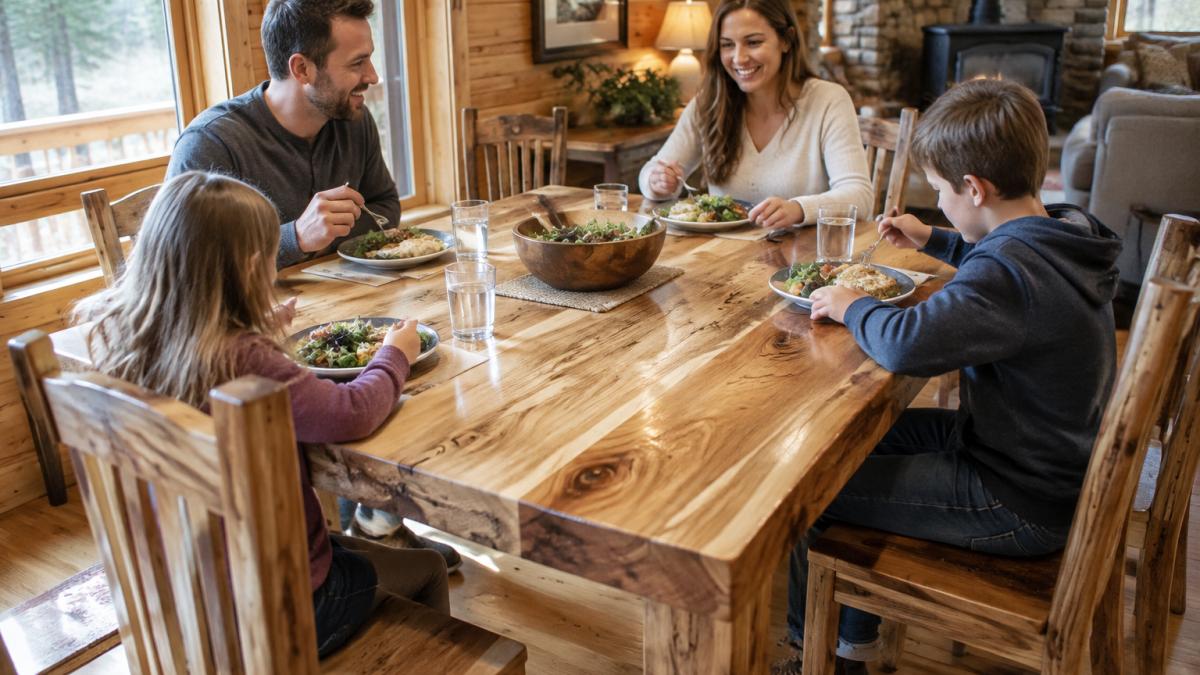
Hickory is heavier than many other species. The trade-off is weight, so moving a hickory table takes more effort.
Best for: households with children, frequent guests or a dining table that sees breakfast, dinner and homework every day. Skip if: you need a light piece you can move often.
Shoppers can compare the Solid Top Hickory Table against other sizes and finishes before deciding.
Oak and Maple: Balanced Durability for Dining and Family Rooms
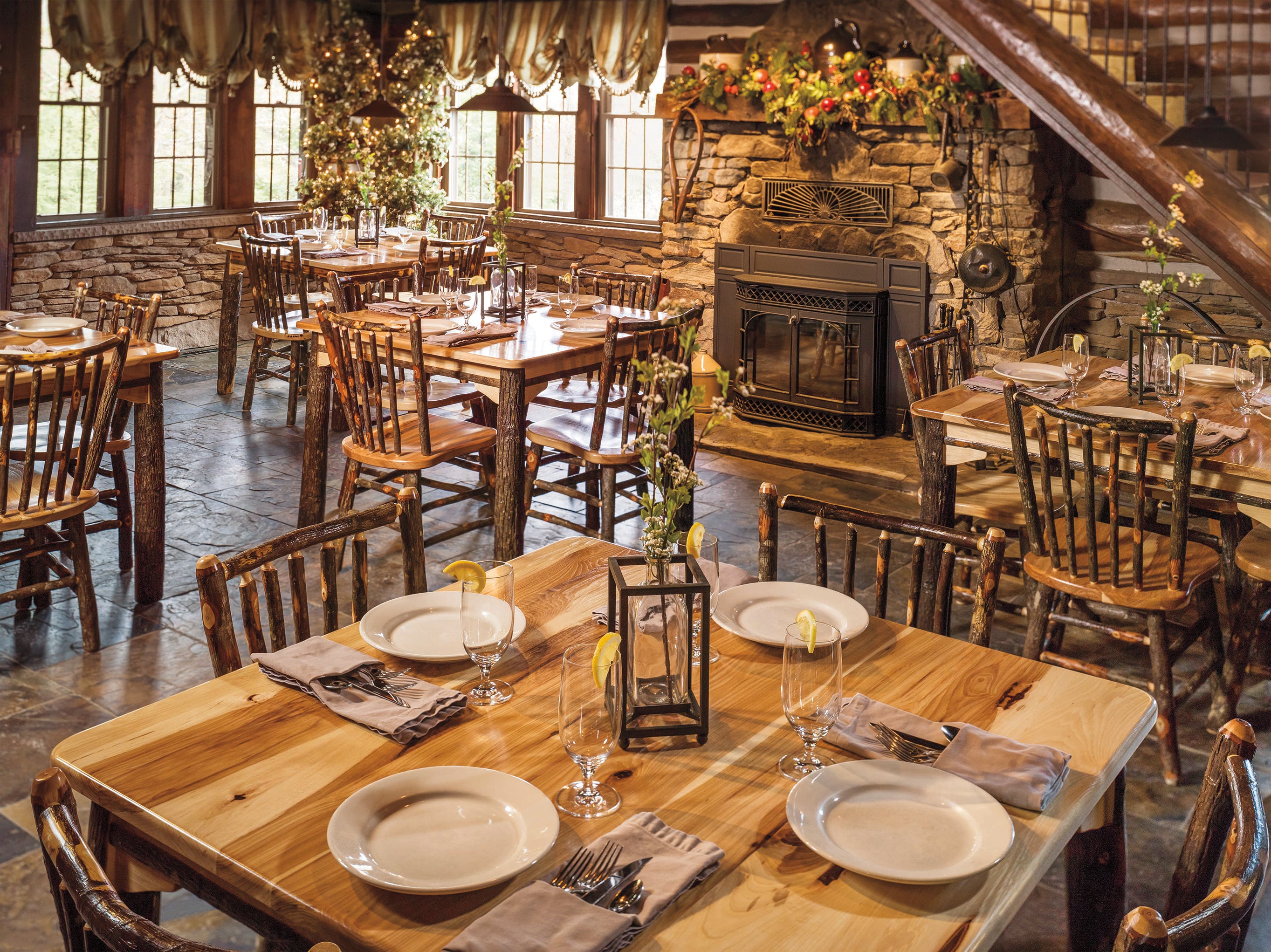
Oak and maple sit between hickory and softer species. Both hold up well in dining rooms and family rooms, and both are easier to live with if you want a lighter visual tone.
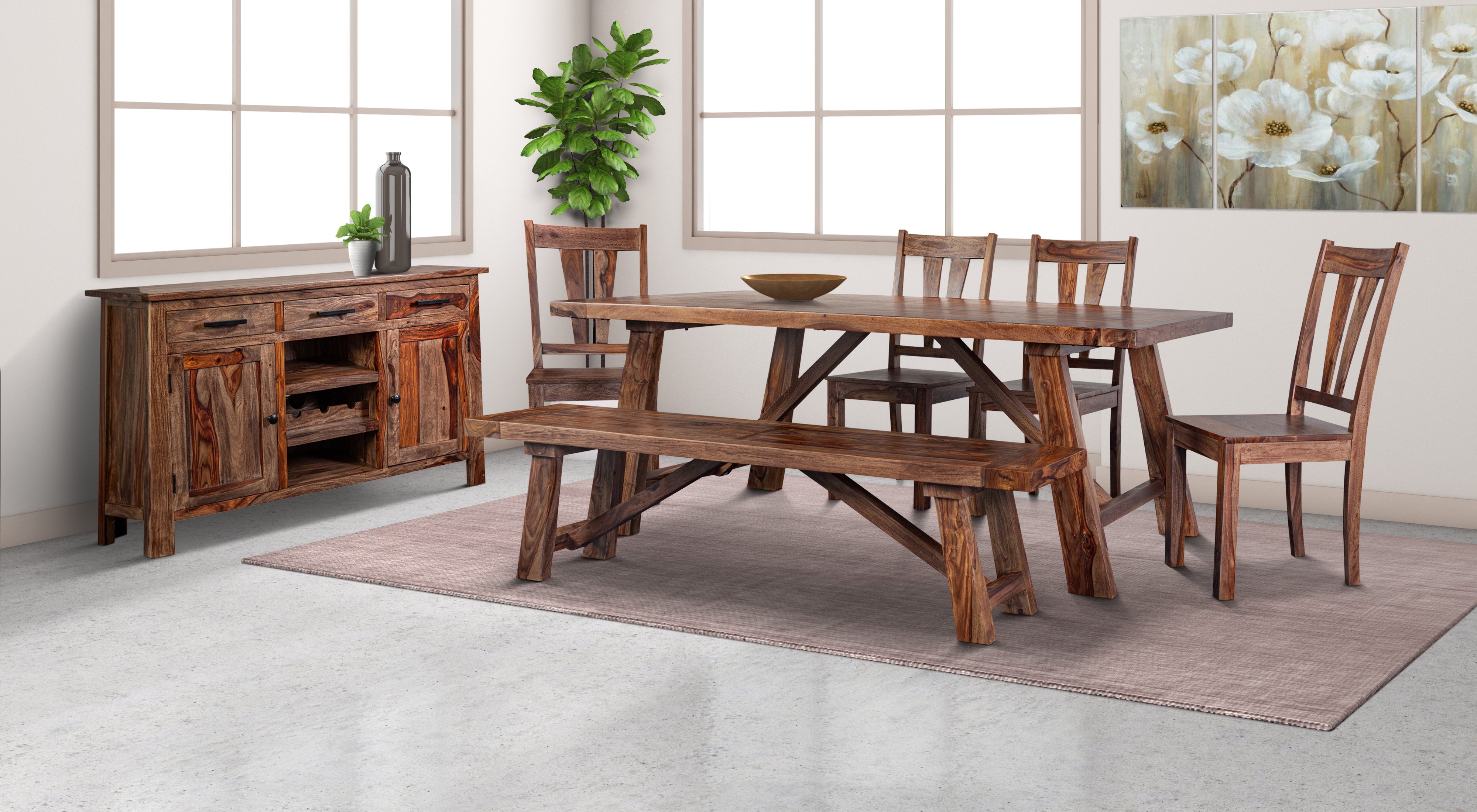
The Kalispell Dining Table, Bench and Chairs is made from 100% real solid sheesham wood, with a distinctive grain. Each piece is hand crafted by artisans, and a matching dining set is available.
The Kalispell dining set suits buyers who want a complete room look with durable solid wood construction.
Is Pine Good for Furniture That Gets Daily Use?
Pine is a softwood, and it dents more easily than hickory, oak or maple. For daily use, that matters. A pine piece can still work well in a low-traffic room, a guest space or a cabin that gets seasonal use, but it needs more care in busy households.
The Montana Woodworks Glacier Country Collection Wood Log Bench is made from solid, U.S.-grown pine and finished with three coats of premium clear lacquer.
Teak Wood and Other Dense Species for Moisture-Prone Spaces
Cozy Cabin Rustics does not list teak in its current catalog, so shoppers should not assume any of its pieces are teak.
For moisture-prone areas, check how the wood was finished and whether the piece is meant for that environment. Ask the seller about sealing and care before buying, and keep solid wood out of standing water and direct sun whenever possible.
Durable Outdoor Furniture for Everyday Use: What to Look For
Outdoor furniture faces sun, rain, temperature swings and humidity that indoor pieces never encounter. Solid wood can work outdoors, but it needs the right species, a protective finish and regular maintenance. The Montana Woodworks Glacier Country Collection Wood Log Bench comes fully assembled and can be shipped U.P.S.
When comparing outdoor pieces, look for:
- A protective finish suited to exterior use
- Solid, fully assembled construction
- Dimensions that match your seating area
- Clear care instructions from the seller
Choosing the Right Piece for Your Home and Your Daily Routine
Start with how the piece will be used, not with the species name. A dining table that seats six and sees daily meals needs more hardness and a more repairable finish than a bedside bench in a guest room. Match the species and construction to the heaviest use the piece will get, then weigh care requirements and lifecycle value.
Match the wood to the room and the job.
- High-traffic dining tables: Hickory and oak are common choices for high-traffic dining tables.
- Beds: Strength and stability matter more than surface hardness.
- Desks: Daily writing, laptops and chair scuffs favor a harder top with a finish that resists water rings and ink.
- Family-room furniture: Children and pets raise the value of hardness and repairability.
- Moisture-prone spaces: Bathrooms, porches and areas near a hot tub call for dense species and exterior-rated finishes.
Household conditions affect real-world durability. Solid wood moves with humidity, so keeping indoor furniture away from direct sun and standing water is a sensible habit. Wipe spills promptly, use coasters under drinks, and place felt pads under items that slide. In homes with children or pets, choose harder species and finishes that can be touched up rather than fully refinished.
Weigh total cost and lifecycle value, not just purchase price. A harder species usually costs more up front, but a piece that needs less repair and can be refinished locally often costs less per year of service. Ask how the finish is maintained, whether scratches can be spot-repaired, and what replacement parts are available.
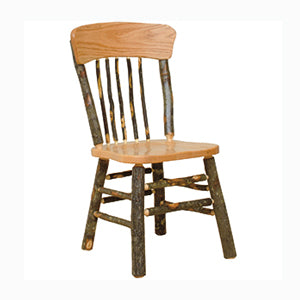
Specific pieces to consider. The Panel Back Side Chair is handcrafted from 100% solid hardwood with a clear lacquer finish, and suits dining spaces, living rooms or cozy nooks. Readers can view its details and compare it against a matching table. Pair it with a hickory table for consistency, or mix it with an upholstered chair for comfort. For bedrooms, the Hickory Log Bed is available in twin, twin XL, full, queen, king and cali. king sizes, with optional underbed storage drawers.
Once you know your use case, compare the species, construction, finish and care requirements across the pieces above, then pick the one that fits your routine.
Frequently Asked Questions
What is the most durable wood for furniture?
Hickory is among the hardest naturally growing North American hardwoods, which makes it one of the most durable choices for furniture used every day. Its density resists dents and everyday wear better than softer species. Oak and maple are also strong, dense hardwoods that hold up well in dining and family rooms. Pine is far softer and shows marks more easily, so it suits lighter use better than heavy daily activity.
Is pine good for furniture?
Pine can work well for furniture, but it is softer than hardwoods like hickory, oak or maple. It dents and scratches more easily, so it suits occasional use or rooms with light traffic better than a dining table used every day. Pine is also affordable and easy to work with, and a finished pine piece can look attractive for years with proper care. If you want furniture that stands up to daily wear, choosing a hardwood is usually the safer investment.
Which wood is best for furniture used every day?
For furniture used every day, dense hardwoods perform best. Hickory is the hardest of the common options and suits tables, chairs and beds that take heavy use. Oak and maple are also dense and stable, making them practical for dining chairs and family-room pieces. Matching the wood to the room and how often the piece is used will give you the best long-term value.
How can you tell if solid wood furniture is well made?
Check that the finish is even and fully coated, and that the wood grain is consistent across each piece. Ask the seller whether the wood species is identified and whether the piece is made from solid wood rather than veneer or engineered material.
